
Europe Expansion
Vector Agents Enters Europe. Announcing Our Regional Leadership.

Europe Expansion
Vector Agents Enters Europe. Announcing Our Regional Leadership.


If you've watched the Artisan demo, you know the pitch: an autonomous AI BDR that prospects, writes, and sends without an SDR on the payroll.
The gap most teams hit is not the concept. It's that the meetings booked reality hasn't matched what the demo showed.
This article covers the six best Artisan AI alternatives worth evaluating in 2025. They are compared on output quality, pricing transparency, ICP fit, and ramp time, so you can make the switch without running another disappointing pilot.
The most common complaint after Artisan deployment isn't that the tool doesn't send emails. It's that the emails require too much editing before they're usable. Ava generates outreach by pulling from a contact database and applying AI writing across an ICP-defined audience. The output tends toward generic, which means a sales employee reviewing campaigns spends time rewriting messages rather than acting on replies. G2 reviewers with verified purchase status describe Ava's output as generic and obviously automated. Separate verified accounts document campaigns of 1,000+ emails generating zero replies, a pattern that appears across multiple independent review threads.
The second issue is targeting logic. Ava matches prospects by ICP fit rather than buying signals, producing high-volume outreach toward the right company type but not toward companies in an active buying cycle. For teams with broad ICPs and high-volume top-of-funnel needs, that's tolerable. For teams selling into niche markets where account-specific context is required to get a reply, it's a structural mismatch that volume can't fix.
A less-discussed reliability issue: in late 2025 and early 2026, Artisan's LinkedIn company page and employee accounts were suspended for approximately two weeks, a period documented in independent sales community discussions and review threads. Teams that had built their outbound workflows around LinkedIn automation absorbed that disruption directly.
These aren't reasons to write off the AI SDR category. They're reasons to evaluate the alternatives more carefully than the demo encourages.
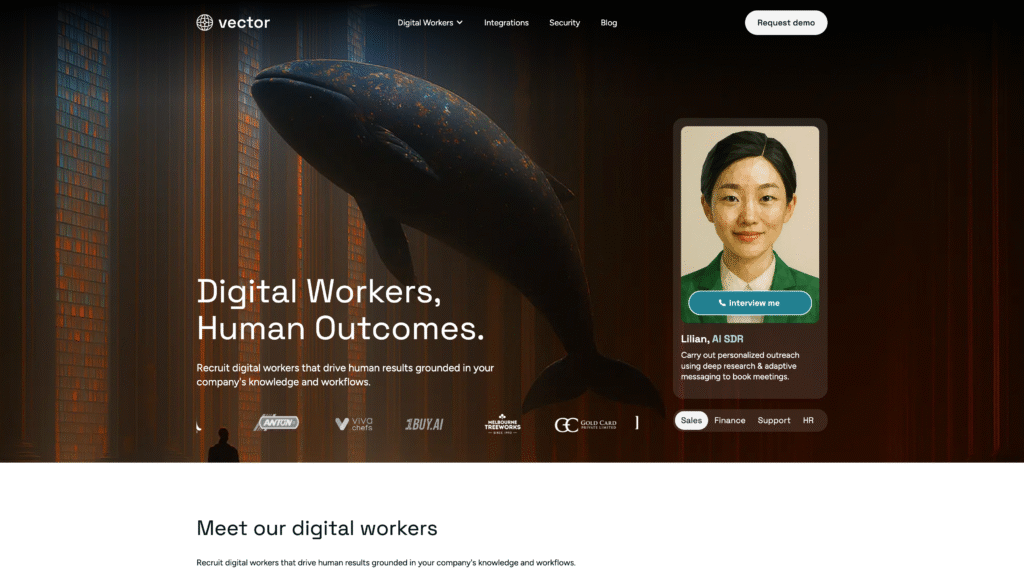
Most AI SDR tools start with a contact database and automate the sending workflow around it. Lilian starts with research.
Before any outreach sends, Lilian builds account-level intelligence on the prospect: hiring signals, funding activity, tech stack changes, and engagement patterns across public sources. That research becomes the foundation of the message rather than a variable inserted into a template. The outreach reads like it was written by someone who understood the account, because the account was understood before the email was drafted.
Vendors who demonstrate they understand a buyer's specific objectives are 86% more likely to win the deal. Artisan's volume model reaches more contacts; Lilian's research model reaches the right ones with outreach that earns a reply. For a sales team whose pipeline target requires qualified meetings, that's the operative distinction.
Lilian's average results show approximately 2,000 leads engaged per month, operating 24/7 across email and LinkedIn, with +30% more meetings per AE and a +45% improvement in conversion rates from better lead targeting. CRM enrichment happens without manual input.
Best for: teams whose ICP requires account-specific context to get a reply; teams where pipeline quality matters more than email volume.
Where it falls short: native CRM integrations are on the roadmap. Teams that need out-of-the-box CRM sync on day one will need to manage a manual data export in the interim.
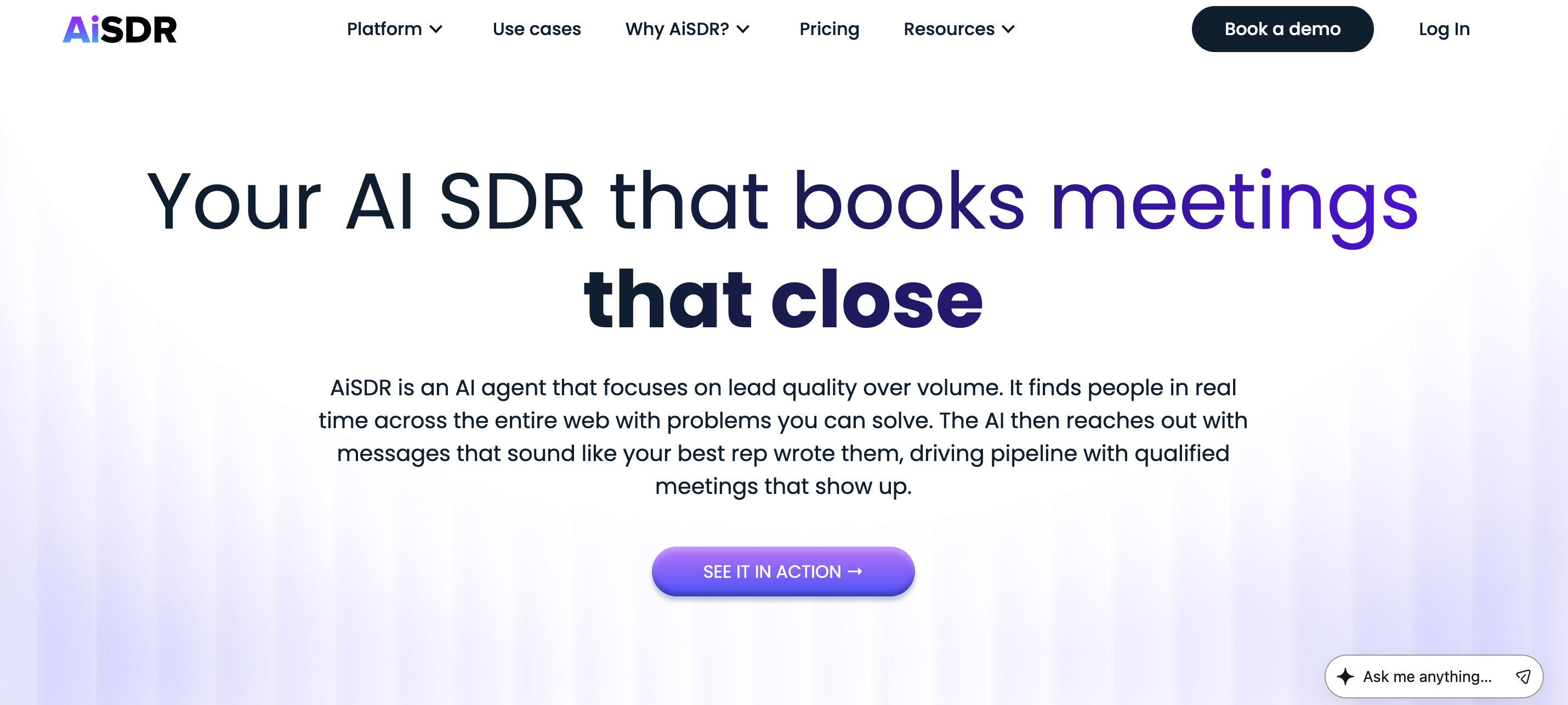
AiSDR publishes its pricing openly: plans start at $900 per month on quarterly contracts, removing the sales-call gatekeeping that Artisan and 11x both use. The platform combines a 700M+ contact database with email, LinkedIn, and optional phone outreach, covering the core channels most outbound teams need.
The quarterly contract structure is a meaningful differentiator for teams that want to run a real pilot before committing to an annual spend. Most Artisan AI competitors require annual contracts, which means teams are evaluating on demo quality rather than live results.
Best for: teams that want Artisan-equivalent functionality with transparent pricing and a shorter commitment term.
Where it falls short: website visitor identification, which flags warm prospects already on your site, is locked to enterprise-tier plans. Standard-tier customers work exclusively from cold outreach, with no visibility into inbound intent signals.
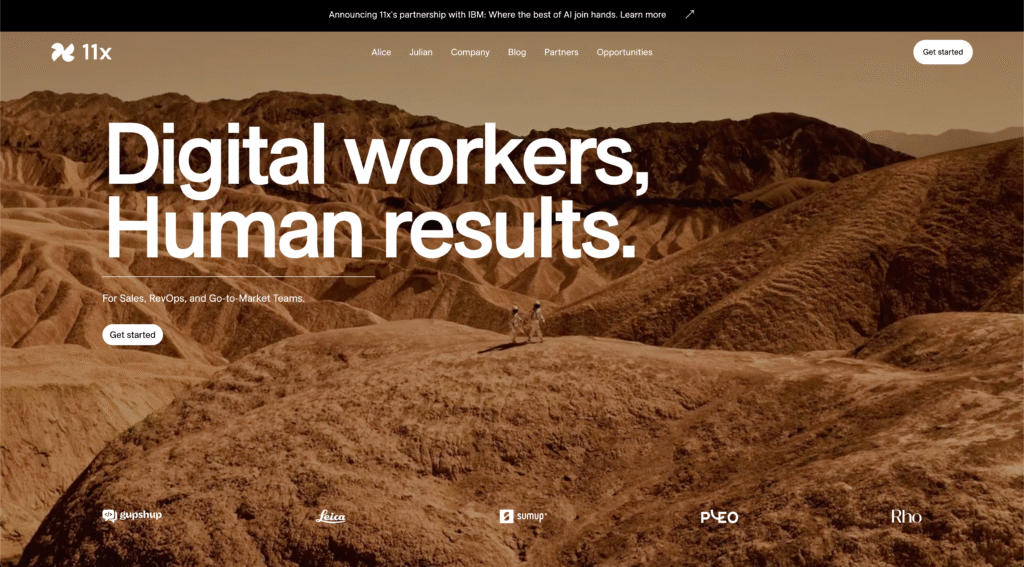
11x vs Artisan is the comparison that surfaces most often in enterprise SDR evaluations, but they serve different buyer profiles. Understanding the difference prevents a like-for-like swap that doesn't actually solve the original problem.
11x offers Alice for email and LinkedIn outbound, and Julian for outbound phone calls. Phone is a channel Artisan doesn't natively support, and for enterprise teams where multi-touch sequencing across email and voice is a requirement, that gap in Artisan is a genuine blocker. 11x also carries SOC 2 Type II certification, which clears a compliance review that blocks many enterprise procurement processes.
Annual contracts run $40,000 to $60,000 or higher per third-party contract data. That's a different budget category from Artisan, with a corresponding expectation of pipeline output.
Best for: enterprise teams with large TAMs, compliance requirements, and budget for a six-figure outbound commitment that includes phone coverage.
Where it falls short: across B2B sales teams, 84% of sales reps missed quota last year, and the data points consistently to lead quality rather than outreach volume as the driver. Switching from Artisan to 11x adds phone coverage and compliance credentials; it doesn't address the precision problem if generic outreach was the original issue. Teams deploying AI SDR tools report initial ramp periods of three to six months before consistent pipeline output, a timeline that extends to six to nine months when prospect data quality requires cleaning before campaigns can run reliably.
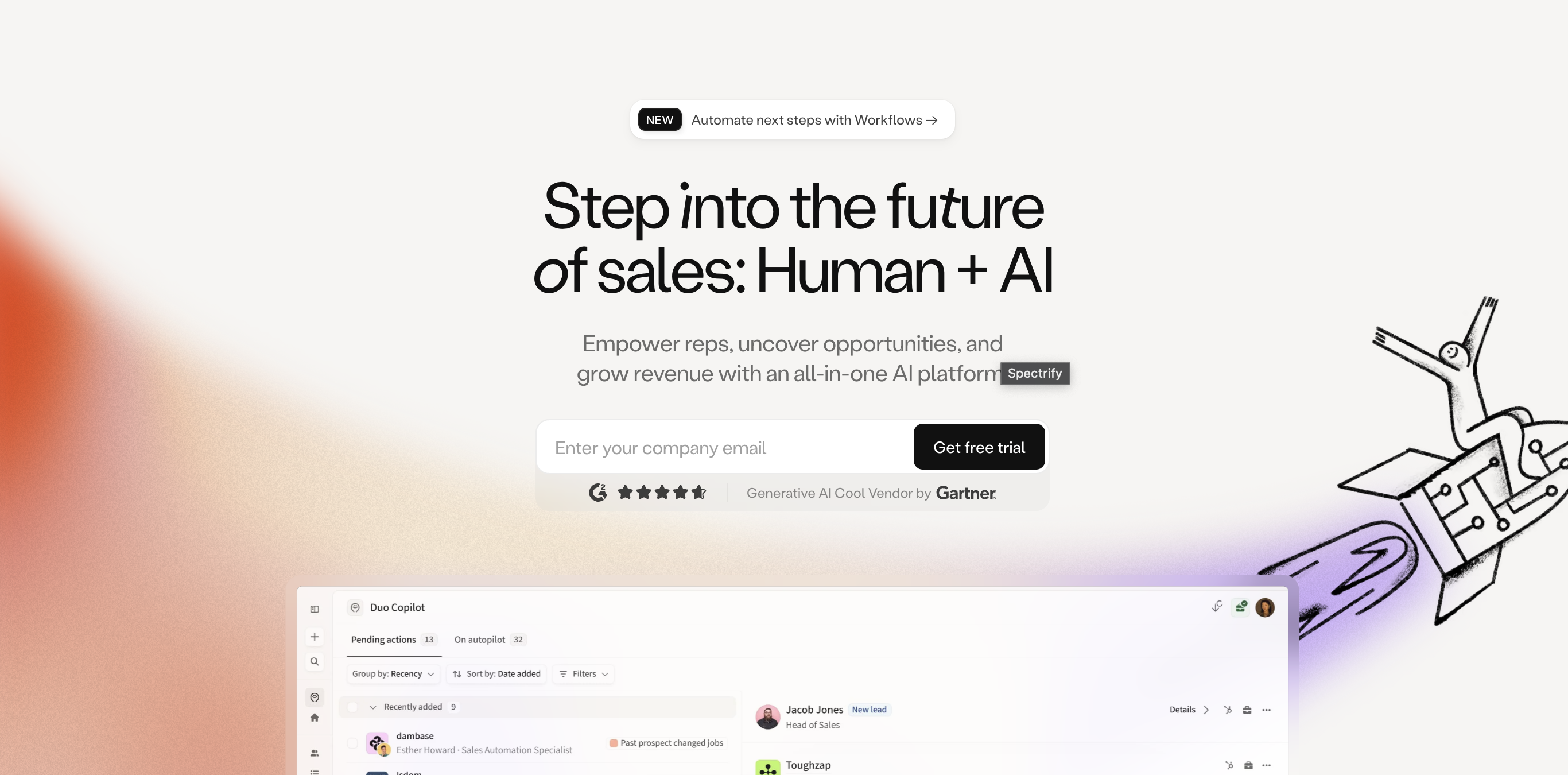
Amplemarket Duo runs a human-in-the-loop model with three specialised agents covering research, writing, and sequencing. Rather than sending fully autonomous outreach, Duo surfaces intelligence and draft messaging that an SDR reviews before it goes out. On a published independent scoring framework covering AI quality, data, signals, and deliverability, Amplemarket Duo scores materially higher than Artisan's Ava across every measured dimension, and the output quality difference is material for teams that have already been burned by generic automated messaging.
The distinction matters operationally: fully autonomous outreach saves SDR time at the cost of output quality; human-in-the-loop outreach preserves quality at the cost of some of that time saving. For teams whose buyer profile requires account-specific context, the trade-off favours Duo.
Best for: teams that want AI research depth combined with human judgment on which contacts to engage and when; teams that tried fully autonomous outbound and found the output required too much correction.
Where it falls short: pricing runs approximately $3,200 per user per year at scale per third-party estimates. The platform is designed for full-team adoption rather than use as a standalone SDR layer, which means the cost compounds quickly on larger teams.
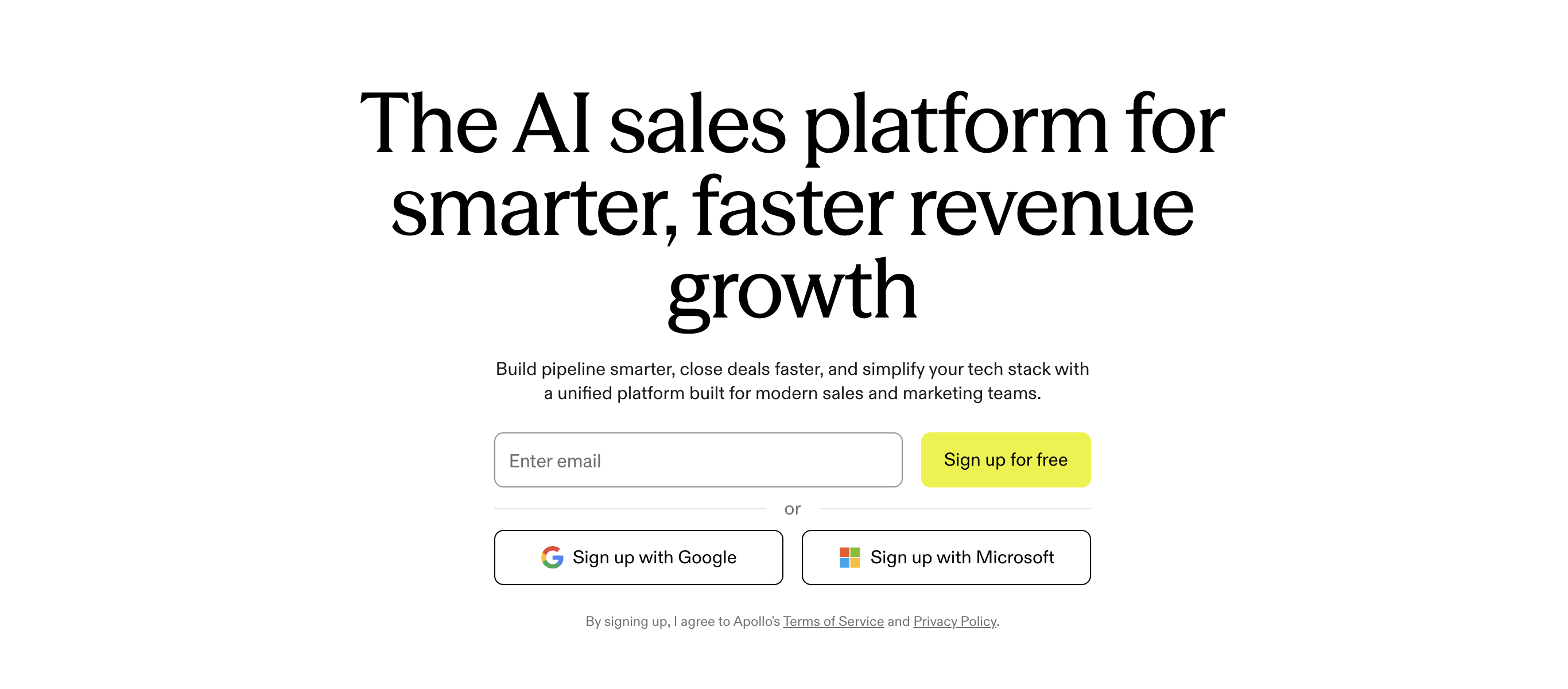
Apollo is the clearest database-plus-sequencing option for teams that want to decouple data sourcing from AI automation. The 210M+ contact database, built-in sequencing, and low entry point ($49 to $119 per month) make it accessible for teams that want coverage without a large annual commitment.
The model differs from Artisan in a meaningful way: Apollo finds contacts and manages send sequencing; the SDR still does the research and message writing. For teams with strong SDRs who want better data coverage, that's a reasonable division of labour. For teams trying to reduce SDR headcount, Apollo doesn't solve that problem.
Best for: teams with existing SDR capacity that want a better data and sequencing layer, not a replacement for the SDR role itself.
Where it falls short: data decay in large B2B contact databases drives bounce rates that damage sender reputation over time, adding a deliverability management task that offsets part of the operational gain.
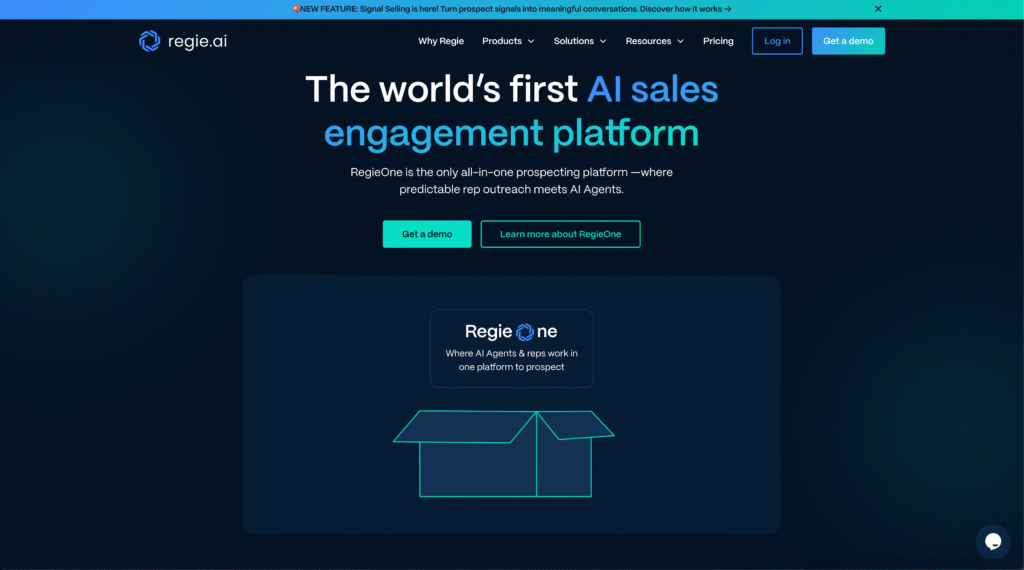
Regie.ai is an AI content generation layer built to sit on top of Outreach and Salesloft rather than replace them. It uses AI to generate and refine messaging within the workflows and sequencing tools SDRs already use. For teams that have invested in a sequencing stack and want better output from it, this model removes the disruption of platform migration while addressing the message quality gap.
Best for: teams with an existing Outreach or Salesloft instance where the gap is message quality, not pipeline volume or SDR headcount.
Where it falls short: Regie.ai depends entirely on having a supported sequencing platform already in place.
The list above covers six different approaches to the same problem. The right fit depends less on feature sets and more on which operational constraint your team is actually trying to solve.
The evaluation question isn't which tool sends the most emails. Sales professionals using AI to handle administrative tasks save two hours per day on average. That productivity gain disappears if the time saved on outreach is spent reviewing and correcting AI output instead of acting on replies.
The search for an Artisan AI alternative isn't about finding a cheaper version of Artisan. It's about finding an outbound approach that produces pipeline without requiring a full-time operator to keep campaigns on-brand, on-target, and generating replies.
The tools that work are the ones whose output quality is high enough that the team acts on results rather than corrects them. The teams stuck in the Artisan problem are spending time managing the AI instead of managing the pipeline it was supposed to generate.
If the gap between emails sent and meetings booked is the number your team needs to close, book a demo to see how Lilian approaches it.
The most common reason is output quality. Ava generates outreach autonomously, but the emails frequently require substantial editing before they meet brand standards, which erodes the time-saving value of the automation. Teams also flag targeting precision: Ava matches prospects by ICP fit rather than buying signals, producing volume without the lead quality needed to fill a pipeline.
11x adds an outbound phone channel via its Julian agent and carries SOC 2 Type II certification, making it better suited to enterprise buyers with compliance requirements. Artisan focuses on email and LinkedIn at a lower price point. Both platforms are outbound-only point solutions with no post-meeting workflow or pipeline intelligence built in.
Most tools in this category don't offer a standard free trial. AiSDR offers quarterly contracts, which reduces the commitment risk compared to Artisan and 11x's annual contract requirements. Vector Agents offers a demo showing live results against your specific ICP before any commitment is made.
Evaluate on four variables: output model (autonomous vs. human-in-the-loop), ICP complexity fit, ramp time to first qualified meeting, and stack integration requirements. Ask each vendor for time-to-first-meeting data from comparable customers rather than relying on feature comparisons alone.
Artisan AI SDR pricing isn't publicly listed. Third-party contract data places it at $1,500 to $2,000 per month on annual contracts, though actual pricing varies and requires a sales conversation. There's no published pricing page and no self-serve trial option, which makes side-by-side cost comparison difficult without going through their sales process.

.svg)


.svg)
Vector AI All rights reserved. © 2025


.jpeg)