
Europe Expansion
Vector Agents Enters Europe. Announcing Our Regional Leadership.

Europe Expansion
Vector Agents Enters Europe. Announcing Our Regional Leadership.



A verified B2B email list turns cold outreach into pipeline a team can actually forecast, but only if the data behind it holds up under a real send. Every named provider states an accuracy number, 95%, 96%, "fully verified," without showing the method behind it, the sample it was measured on, or how long it holds before contacts change jobs or companies. That mismatch between the claim and what a team can check for itself is the real problem, not which provider has the biggest database.
This article compares the named providers that come up when teams shop for a B2B email list, shows where each one specifically falls short, and covers how to find a B2B email list without paying for one at all. It also covers what a bad list costs once it is loaded into an outreach tool and sent.
Picking from the best B2B email list providers starts with knowing what each one is actually built for, since the marketing pages tend to blur together.
The pattern across all eleven: only 65% of marketers say they have high-quality audience data, and that figure has not moved year over year, even when they are rating data they sourced and control directly. If marketers can only vouch for 65% accuracy in data they own outright, a vendor's self-reported 95% for data it sourced and a buyer did not is a number worth testing, not trusting.
With no provider offering a number a buyer can independently check, the next real option is not buying a list at all.
Sourcing contacts without a purchase order is slower, but it removes the accuracy-claim problem entirely, since every contact's origin is traceable back to the team that captured it. Three practical paths exist:
Before defaulting to the CRM data already sitting in the system, it is worth checking how much of it is still usable. Sales leaders estimate that 19% of their company's data is inaccessible, which limits visibility and personalization on exactly the contacts a team assumes it can already reach. Existing CRM data decays the same way a purchased list does; it does so quietly, without a renewal invoice to flag the problem.
Operating teams that get this right run a blend rather than picking one lane: a purchased or platform-sourced base list, filtered down to the real ideal customer profile, refreshed on a set schedule, and topped up over time with inbound capture. Building alone is slower, but every contact's provenance holds up under scrutiny. Buying alone is faster but inherits whatever sourcing limitations the provider never disclosed, as the comparison above shows contact by contact.
Whichever mix a team lands on, the list still has to survive contact with deliverability systems and the law, and that is where the real cost of getting it wrong shows up.
A list with a meaningful bounce rate does more than waste the sends aimed at bad addresses. Mailbox providers read a high bounce rate as a signal that the sending domain may be spamming, which can suppress inbox placement for that domain broadly, including legitimate email that has nothing to do with the list that caused the problem.
Compliance risk runs in parallel and does not disappear because a provider handled the sourcing. Buying a list from any of the eleven providers above does not transfer legal responsibility for how that data was originally collected; the buyer inherits that exposure the moment the first email goes out.
The numbers behind that exposure are not abstract. The maximum civil penalty for a CAN-SPAM violation runs to $53,088 per individual email, a figure adjusted for inflation as of January 2024. That is the ceiling per message, not per campaign, which changes how a provider's unverified compliance claim should be weighed before a full list goes into production.
Given stakes at that scale, checking a list, whether bought or built, before committing real budget to it is not optional.
Once a list clears these checks, treat it as something requiring ongoing upkeep rather than a one-time asset: re-verify on a schedule, remove hard bounces immediately, and honor unsubscribes across the full list, not just the campaign that triggered them.
A B2B email list that clears every check above, verified, compliant, freshly refreshed, is still only potential pipeline until someone works it. Each contact needs research before outreach, a message written to their actual situation, a follow-up when the first message goes unanswered, and a qualification step before the reply becomes a real meeting.
That is where the bottleneck moves once the sourcing problem is solved. It stops being about where the contacts come from and becomes about who has the hours to work the list at the volume the pipeline target requires, without turning that into a new headcount line. SDR ramp time is the cost that never shows up on a provider's invoice, but it shows up in how long a fresh list sits untouched.
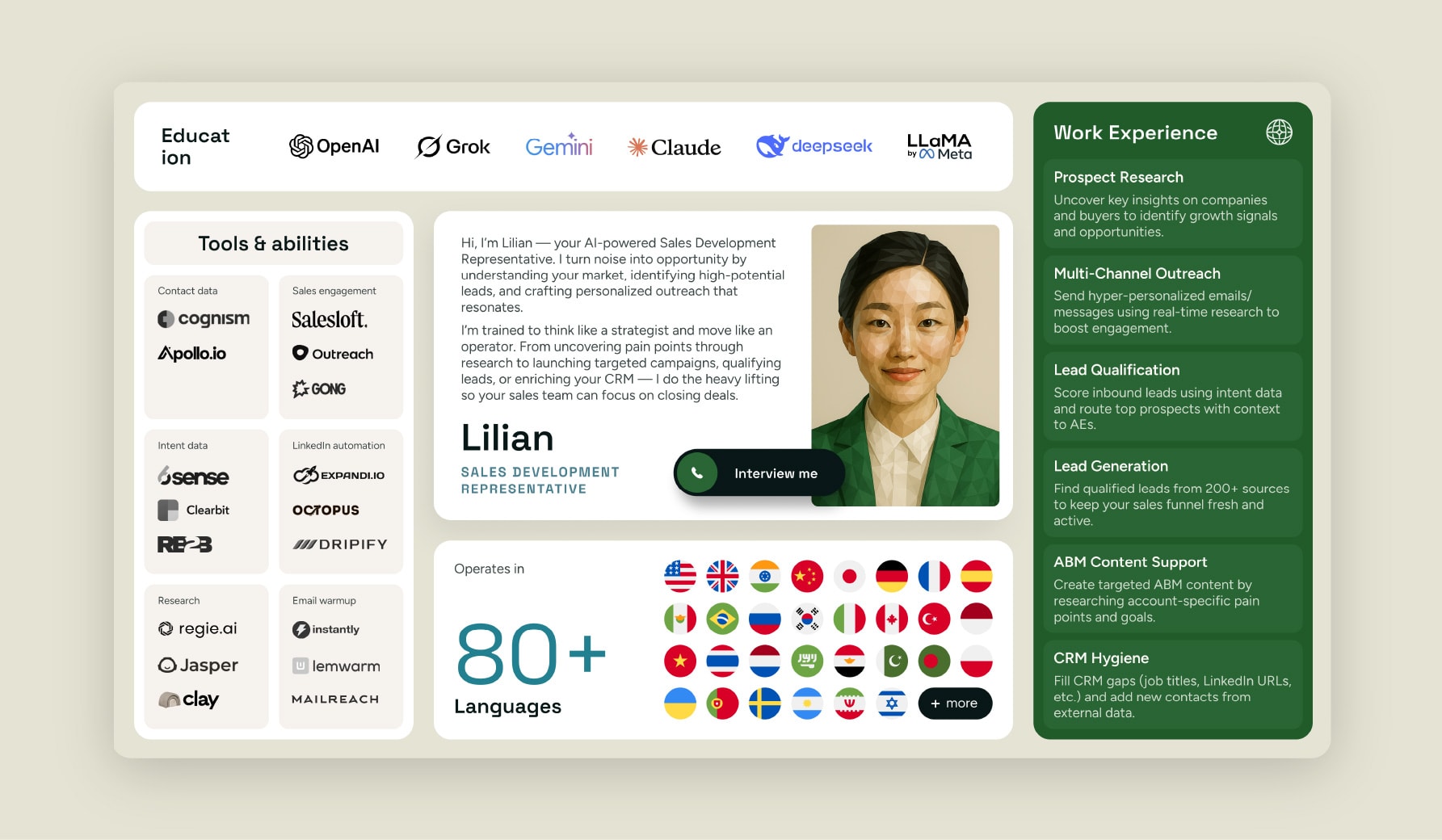
Vector Agents AI digital worker Lilian runs that motion directly against a list a team has already sourced and verified: researching each contact, sending personalized outreach, following up on schedule, and qualifying replies before they reach a rep's calendar, without adding an SDR to do it.
Every provider on the comparison above states an accuracy number that cannot be checked before a purchase, and buying does not transfer the compliance exposure that comes with a poorly sourced list. Sampling, live-testing, and ongoing hygiene are what actually protect a B2B email list investment, not the number on the pricing page.
Once a list clears those checks, the next constraint is working it at the volume a real pipeline target requires. Book a demo with Vector Agents to see how Lilian runs that motion without adding headcount.
Yes, in most jurisdictions, but the rules vary. The US permits cold commercial email under CAN-SPAM without prior consent, provided sender information is accurate and opt-outs are honored. The EU, UK, and Canada generally require a documented lawful basis or consent before the first email is sent, so legality depends on where the recipients are located, not just where the sender operates.
Cost depends on whether a team buys, builds, or blends. Purchased lists range from roughly $25 to $99 per seat or month for self-serve platforms, with enterprise tiers priced by conversation. Building in-house has no license fee but consumes staff hours for research and verification, so the real comparison is dollars against time, not one flat number.
There is no universal interval, but contacts change roles and companies continuously, so a list left untouched for more than a few months will already show measurable decay. Set a recurring re-verification schedule, remove hard bounces immediately after each send, and treat refresh cadence as an ongoing operating task rather than a one-time setup step.
A list is a static export: a fixed set of contacts as of the day it was delivered. A sales intelligence platform is a live, queryable database that updates continuously and often layers in intent signals, firmographic filters, and CRM syncing. Platforms cost more but stay current; a static list starts decaying the moment it is downloaded.
A self-reported guarantee, like UpLead's stated 95% figure, reflects the provider's own measurement, not an independent audit. Treat it as a starting claim to verify, not a fact to build on. Testing a sample against a real send is the only way to confirm whether a specific list performs at the rate the provider advertises.

.svg)


.svg)
Vector AI All rights reserved. © 2025


.jpeg)